

Electricity Connections for Commercial Premises: Avoiding Costly Delays
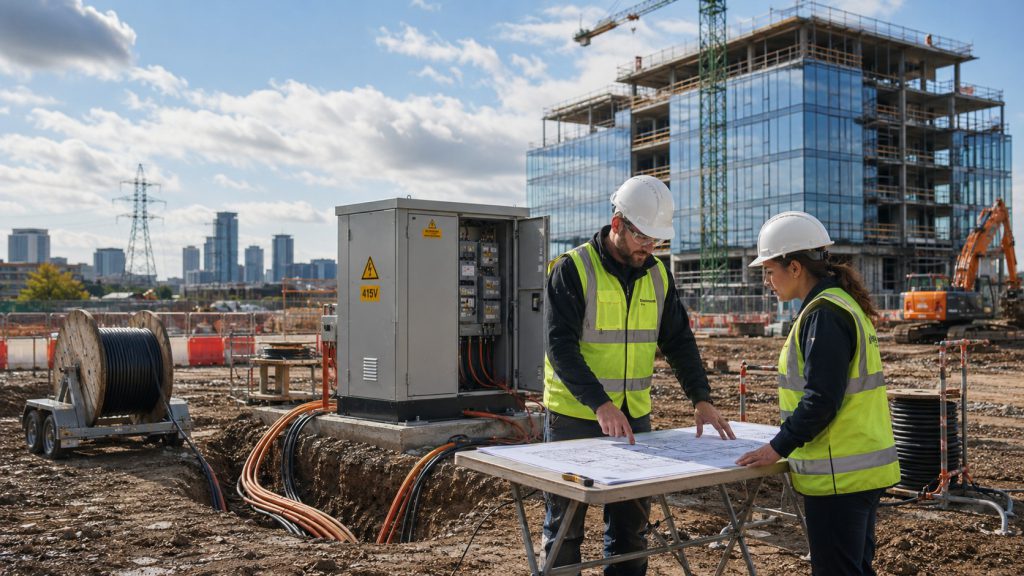
For developers, site owners, facilities managers, and growing businesses, securing a commercial electricity connection is one of the most important milestones in any project. Whether you are constructing a new commercial property, expanding an existing facility, opening a new retail location, or developing an industrial site, access to a reliable electricity supply is essential.
However, electricity connections are often left until late in the planning process. As a result, businesses frequently encounter unexpected delays, increased costs, and project overruns that could have been avoided with earlier preparation.
Understanding how commercial electricity connections work, what causes delays, and how to plan effectively can help businesses keep projects on schedule and avoid unnecessary expenditure.
Why Commercial Electricity Connections Stall
One of the most common misconceptions is that an electricity connection can be arranged quickly once construction is nearing completion. In reality, obtaining a business electricity connection involves several stages, including design assessments, capacity checks, approvals, network planning, and physical installation works.
Delays often occur because businesses underestimate the complexity of the process.
For example, a developer may assume sufficient network capacity is available nearby, only to discover that reinforcement works are required before the connection can proceed. In other cases, site access challenges, permit requirements, or incomplete application information can significantly extend project timelines.
Another common issue is poor coordination between stakeholders. Developers, contractors, utility providers, network operators, and local authorities may all be involved at different stages of the project. If communication breaks down or critical decisions are delayed, the entire programme can be affected.
For businesses working to strict opening dates or tenant handover deadlines, even a few weeks of delay can have significant financial consequences.
Capacity Planning Mistakes Businesses Often Make
Capacity planning is one of the most overlooked aspects of a new electricity connection.
Many organisations focus solely on their immediate electricity requirements without considering future growth. While this approach may reduce initial costs, it can create major problems later.
For example, a commercial warehouse may initially require a relatively modest power supply. However, if the business later introduces automation systems, electric vehicle charging infrastructure, refrigeration equipment, or additional production machinery, the original connection may no longer be sufficient.
Similarly, commercial office developments increasingly require greater electrical capacity to support modern HVAC systems, data infrastructure, security systems, and sustainability initiatives.
Under-sizing a connection can result in expensive upgrade projects shortly after the initial installation.
Conversely, specifying a connection that is significantly larger than required can lead to unnecessary capital expenditure.
The most effective approach is to assess both current and future electricity demands. Businesses should consider growth plans, potential changes in building usage, technological developments, and sustainability objectives before finalising their connection requirements.
A professional assessment during the planning stage can help ensure the electricity supply is correctly sized from the outset.
Timelines Businesses Commonly Underestimate
Commercial electricity connections rarely happen overnight.
The overall timeline can vary considerably depending on factors such as location, required capacity, existing network infrastructure, and project complexity.
The process may involve:
- Initial consultation and design
- Network capacity assessment
- Site surveys
- Approval processes
- Permit applications
- Installation planning
- Civil engineering works
- Final connection and commissioning
Each stage takes time.
Where road crossings, traffic management measures, or network reinforcement works are required, timelines can increase significantly.
Many businesses make the mistake of treating the electricity connection as a final task before occupation. In reality, it should be considered a critical project workstream from the earliest stages of development.
For large commercial projects, it is often advisable to begin discussions regarding the electricity connection as soon as planning permission is being considered.
This proactive approach provides greater flexibility and reduces the risk of programme delays later.
How Early Site Investigations Reduce Risk
One of the most valuable investments a business can make during project planning is a professional site investigation.
Site investigations help identify potential challenges before they become costly problems.
During a site investigation, specialists assess factors such as:
- Existing utility infrastructure
- Ground conditions
- Access constraints
- Potential routing options
- Network connection points
- Environmental considerations
- Construction risks
The information gathered allows project teams to make informed decisions before construction work begins.
For example, a site investigation may identify underground utilities that could affect cable routing. It may reveal access challenges that require alternative installation methods. It could also highlight network capacity limitations that need to be addressed early in the process.
Without this information, businesses may encounter unexpected issues during installation, leading to delays, redesign costs, and disruption to project schedules.
Early site investigations provide greater certainty and help businesses manage both risk and budget more effectively.
The Cost of Delayed Electricity Connections
Many businesses focus on the direct cost of a connection while overlooking the financial impact of delays.
A delayed electricity connection can affect multiple aspects of a project.
For developers, it may postpone tenant occupation and rental income.
For manufacturers, it may delay production schedules.
For retailers, it can push back opening dates and revenue generation.
For logistics operators, it can disrupt supply chain planning.
In some cases, contractors may remain on site longer than expected, increasing project costs. Temporary power solutions may also be required, adding further expense.
When viewed from this perspective, investing in proper planning and expert support often delivers substantial long-term savings.
Best Practices for a Successful Commercial Electricity Connection
Businesses can significantly improve project outcomes by following a few key principles:
Start Early
Begin planning your electricity connection as early as possible. The earlier potential issues are identified, the easier they are to resolve.
Understand Future Demand
Do not design solely for today’s requirements. Consider future growth, expansion plans, and changing operational needs.
Invest in Site Investigations
A comprehensive site investigation can uncover risks before they affect project delivery.
Work With Experienced Specialists
Experienced connection providers understand the technical, regulatory, and operational challenges involved in commercial projects. Their expertise can help streamline the process and reduce delays.
Coordinate All Stakeholders
Ensure developers, contractors, utility providers, and project managers remain aligned throughout the project lifecycle.
Conclusion
A commercial electricity connection is far more than a utility installation. It is a critical component of project delivery, business continuity, and future growth.
Delays are often caused by poor planning, inaccurate capacity assessments, and insufficient site information. By starting early, investing in proper site investigations, and working with experienced specialists, businesses can significantly reduce risk and keep projects on schedule.
If you are planning a new development, expanding an existing facility, or preparing a commercial property for occupation, taking a proactive approach to your electricity connection can save both time and money.
Need expert support?
Explore our Commercial Electricity Connection services to learn how we help businesses across the UK secure reliable power connections efficiently and professionally. Or contact our team today to request a quote and discuss your project requirements.