

Electricity Meter Services for Businesses: Accuracy, Capacity & Compliance
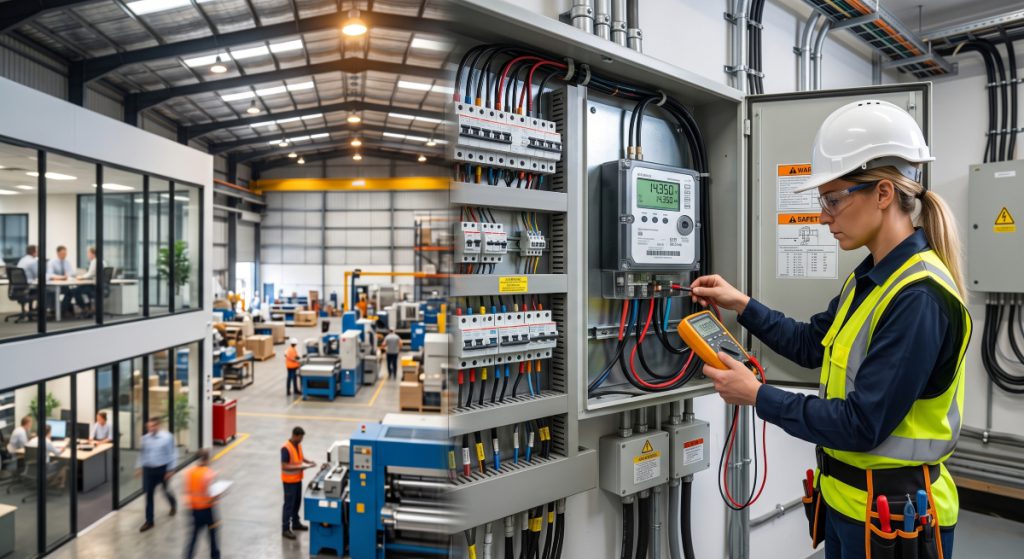
Electricity meters are easy to overlook until they become a problem. For businesses, however, the meter is a critical part of the electricity infrastructure. It records consumption for billing, must be suitable for the site’s operational requirements and needs to remain accessible, safe and properly coordinated with the electricity supply.
As businesses grow, relocate, refurbish premises or change how a site operates, an existing meter may no longer be suitable. This is where professional commercial electric meter services become important.
Whether you require a business electricity meter installation, upgrade, relocation or removal, making the right decision early can help protect billing accuracy, control project costs and avoid unnecessary disruption.
Why outdated or unsuitable electricity meters can cost businesses money
An electricity meter should accurately record the energy consumed by the premises. When metering arrangements are outdated, unsuitable for the current site configuration or no longer aligned with the way the business uses electricity, problems can arise.
Billing accuracy is one obvious concern. Businesses need reliable consumption data to understand energy expenditure, monitor budgets and investigate unexpected increases in electricity costs.
The type of meter also matters. Different commercial sites have different consumption profiles, contractual arrangements and data requirements. A meter that was appropriate when a property had relatively modest electricity demand may not remain suitable after expansion or a significant change in operations.
Businesses may also inherit existing metering arrangements when taking over premises. Before relying on these arrangements, it is sensible to establish whether the meter, supply capacity and associated infrastructure remain appropriate for the intended use of the building.
For organisations operating several locations, effective metering becomes even more important. Reliable consumption information helps management compare sites, identify unusual usage patterns and make better decisions about energy efficiency and future investment.
When is business electricity meter installation required?
A business electricity meter installation is commonly required when a commercial property receives a new electricity supply, when previously unmetered premises are brought into use or when a development creates a new supply point.
Importantly, arranging the electricity connection and arranging the meter are connected, but they are not necessarily the same process.
If you are planning a new business electricity connection, metering should be considered at the same time as the physical electricity connection. Leaving the meter until the network connection is almost complete can result in a finished premises that still cannot be used as intended because the metering and supply arrangements have not been coordinated.
The meter specification should reflect the operational requirements of the property. Factors such as expected consumption, supply capacity, the nature of the electrical load and future expansion plans should therefore be considered before installation.
For a growing business, planning only around today’s electricity requirements can be short sighted. New machinery, additional HVAC equipment, refrigeration, EV charging, data infrastructure or extended operating hours can all change future electricity demand.
Early planning helps ensure the metering arrangement supports both current operations and realistic future requirements.
When might a business electricity meter upgrade be needed?
A business electricity meter upgrade may be required when the existing setup no longer meets operational, technical or metering requirements.
Common triggers include business expansion, increased electricity demand, major equipment installations, refurbishment or changes to the way the premises are occupied.
An upgrade may also form part of a wider electricity infrastructure project. For example, if the site’s supply capacity is being increased, the existing meter and related equipment may need to be reviewed to ensure they remain suitable.
The important point for decision makers is not to treat the meter in isolation.
Before making changes, establish why the upgrade is required. Is the issue related to capacity? Is better consumption data needed? Is existing equipment being replaced? Has the layout of the property changed?
Understanding the underlying requirement allows the project team to select the right solution rather than simply replacing one meter with another.
Electricity meter relocation during refurbishment or site changes
Meter relocation is particularly relevant during refurbishment, redevelopment and changes to commercial layouts.
A meter that was once conveniently positioned may become an obstacle when a building is reconfigured. Businesses may need to move a meter because of new walls, changes to entrances, alterations to plant areas or requirements for improved access.
However, commercial electricity meter installation and relocation should be incorporated into the refurbishment programme from the beginning.
The proposed new location must be technically suitable and accessible for future inspection and maintenance. Existing cable routes, supply equipment and site conditions also need to be considered.
Poor coordination can create expensive problems. Building work may be completed before anyone realises that the chosen meter position is unsuitable, resulting in redesign, additional electrical work and delays to occupation.
For operations managers and project teams, the best approach is to identify metering requirements during the initial site planning stage rather than once construction is already underway.
When is commercial electricity meter removal appropriate?
Commercial electricity meter removal is generally relevant when a meter is no longer required, when a supply is being decommissioned or when existing equipment is being replaced as part of wider site works.
Examples may include the closure of premises, redevelopment of a property, consolidation of supply points or permanent changes to the building’s electricity infrastructure.
Removing a meter should be treated as part of a controlled utility project, not as an isolated physical task.
The electricity supply may need to be safely disconnected, the relevant organisations coordinated and the status of the supply point properly managed. If the premises might require electricity again later, decision makers should also understand what removal means for future reconnection.
Removing infrastructure now and reinstalling it later can add avoidable cost and complexity. Before proceeding, consider the long term plans for the site.
Compliance and supplier coordination
Commercial electricity metering involves several parties, and understanding their responsibilities helps prevent project delays.
Electricity network operators manage the infrastructure that delivers power to the premises, while energy suppliers have responsibilities associated with electricity supply and metering. Depending on the project, other specialists may also be involved in meter operation, installation and related technical work.
For businesses, the practical lesson is straightforward, coordination matters.
When planning a new connection, meter installation, relocation or removal, make sure the relevant organisations are engaged at the correct stage. Do not assume that completing one part of the electricity infrastructure automatically completes the others.
Clear project management is particularly valuable for larger or more complex commercial sites where network work, metering, internal electrical works and building programmes may all need to align.
Compliance should also take priority over short term cost savings. Using an unsuitable solution or failing to coordinate the required parties can result in rework, delayed occupation and additional expenditure.
Balancing cost, capacity and future growth
Businesses naturally want to control the cost of electricity infrastructure projects. However, the cheapest immediate solution is not always the lowest cost option over the life of the premises.
A correctly planned metering solution should consider three questions.
First, does the meter support the site’s current operational requirements?
Second, does it provide the consumption information needed for effective billing and energy management?
Third, can the wider electricity infrastructure accommodate foreseeable business growth?
This is especially important for businesses investing in additional electrical equipment, automation, EV infrastructure or building electrification.
Where future demand is expected to increase significantly, it may be appropriate to review the electricity connection and meter requirements together. This can prevent businesses from completing a meter project today only to discover that another infrastructure upgrade is required shortly afterwards.
Plan electricity meter changes early
Electricity metering may represent a relatively small part of a major property project, but it can have a disproportionately large effect on whether the premises are ready for operation.
Early planning gives businesses time to assess requirements, coordinate suppliers and network providers, schedule work around operational needs and ensure that any new meter location is suitable.
It also reduces the risk of discovering metering problems shortly before a planned opening, tenant handover or operational expansion.
For responsible persons managing commercial premises, the objective should be a meter arrangement that is accurate, compliant, accessible and appropriate for both current and future electricity demand.
Need support with your commercial electricity meter?
National Gas provides commercial electric meter services for businesses of different sizes, including meter installation, disconnection, removal and relocation.
If you are installing a new meter, changing your existing arrangement or coordinating metering as part of a wider property project, explore our commercial electricity meter service and request a free, no obligation quote. Planning a new supply as well? Read more about arranging a new business electricity connection and coordinate your connection and metering requirements from the beginning.