


Powering Your Property: A Guide to New Electricity Connections in the UK
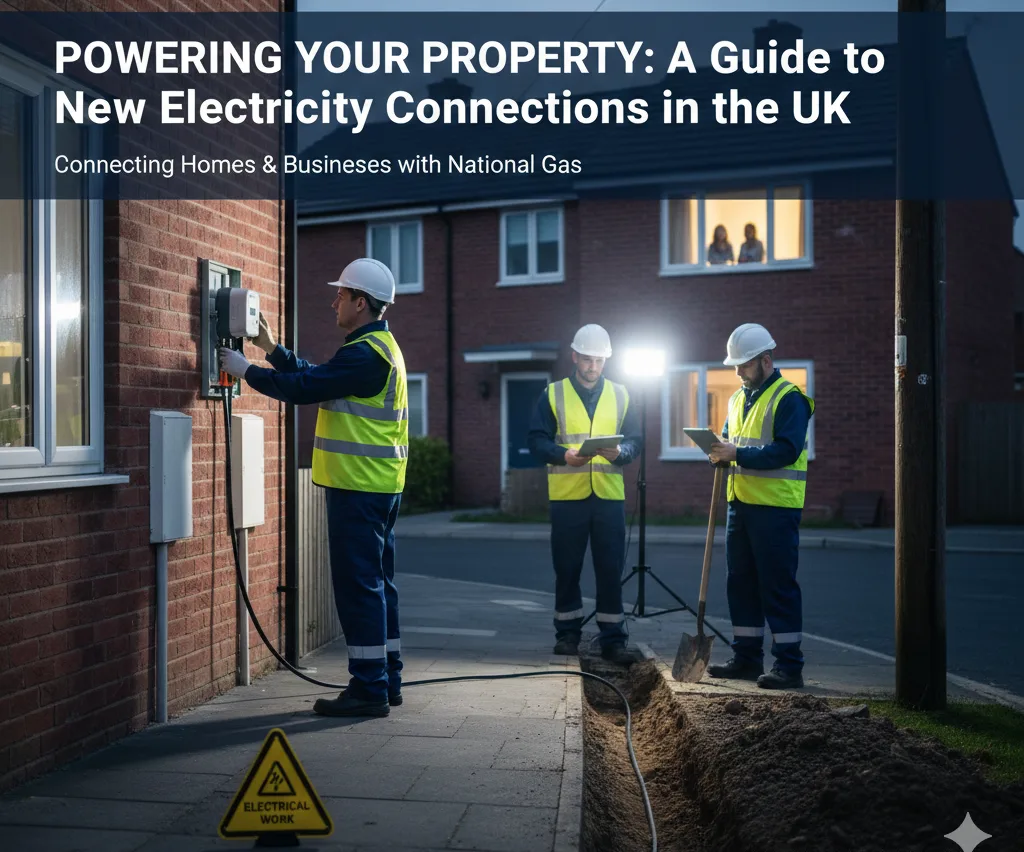
In an increasingly electric world—where heat pumps and EV chargers are becoming the standard—securing a reliable power supply is more important than ever. While National Gas is your expert partner for gas infrastructure, we understand that many of our clients are managing “dual-fuel” projects.
Getting your property connected to the grid involves a different set of experts and a unique process. Here is everything you need to know about setting up an electricity connection in 2026.
1. Who Manages the Wires?
Just like the gas network, the UK electricity system is split into two parts:
- Distribution Network Operators (DNOs): These companies own and maintain the cables, towers, and substations that bring electricity to your door. There are six main DNOs in the UK (such as National Grid Electricity Distribution, UK Power Networks, and SSEN). You must contact them for the physical connection.
- Electricity Suppliers: These are the companies you pay your bills to (like Octopus, British Gas, or E.ON). They are responsible for installing your meter once the DNO has finished the wiring.
2. The Step-by-Step Connection Process
A new electricity connection typically takes 4 to 12 weeks, depending on the complexity of the site.
- Identify Your DNO: Use the Energy Networks Association (ENA) postcode tool to find out who manages the cables in your area.
- Application & Site Survey: Submit an application with a site plan. For larger projects (like a business park or a block of flats), the DNO will perform a “Load Assessment” to ensure the local grid can handle your power demands.
- The Quotation: You will receive a quote broken down into:
- Contestable Work: Tasks that can be done by an independent contractor (like digging trenches).
- Non-Contestable Work: Tasks only the DNO can perform (like the final connection to the live grid).
- Obtain your MPAN: Once the application is accepted, you’ll be issued a Meter Point Administration Number (MPAN). You cannot get a meter without this!
- Meter Installation: Contact your chosen supplier, give them your MPAN, and they will install your smart meter.
3. Estimated Costs for 2026
Costs fluctuate based on the distance from the nearest substation and whether you require a “Single Phase” (standard home) or “Three Phase” (high-demand/commercial) supply.
| Connection Type | Estimated Cost (Incl. VAT) |
| Standard Domestic (Single Phase) | £1,300 – £1,800 |
| Small Commercial / Multi-Domestic | £2,600 – £5,500+ |
| Smart Meter Installation | Usually Free from Supplier |
4. Planning for the Future: EV and Heat Pumps
If you are building or renovating in 2026, you must plan for higher “peak loads.”
- EV Charging: A standard 7kW home charger draws significant power. Ensure your DNO knows you plan to install one so they can provide a sufficiently rated fuse.
- Three-Phase Power: For modern “smart homes” or commercial workshops, a three-phase connection is often recommended to prevent overloaded circuits and allow for faster charging speeds.
Need a Coordinated Solution?
Managing both gas and electricity connections at the same time can be a logistical challenge.
